
We want the places we take travellers to be better for our being there. Alongside our trips we build school classrooms, set up libraries, run health camps, give scholarships, donate clothes and school supplies, plant trees and support orphanages.
Since 1999, together with donors from around the world, we have built more than 150 classrooms and four libraries, many of them in villages rebuilding after the 2015 earthquake.
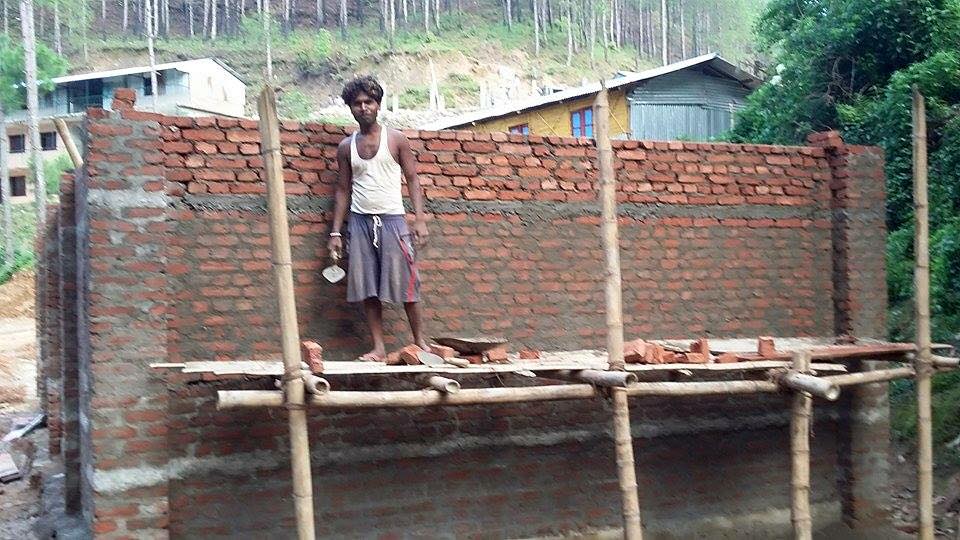
Classrooms in Nuwakot
New classrooms under construction in Nuwakot district, north-west of Kathmandu.
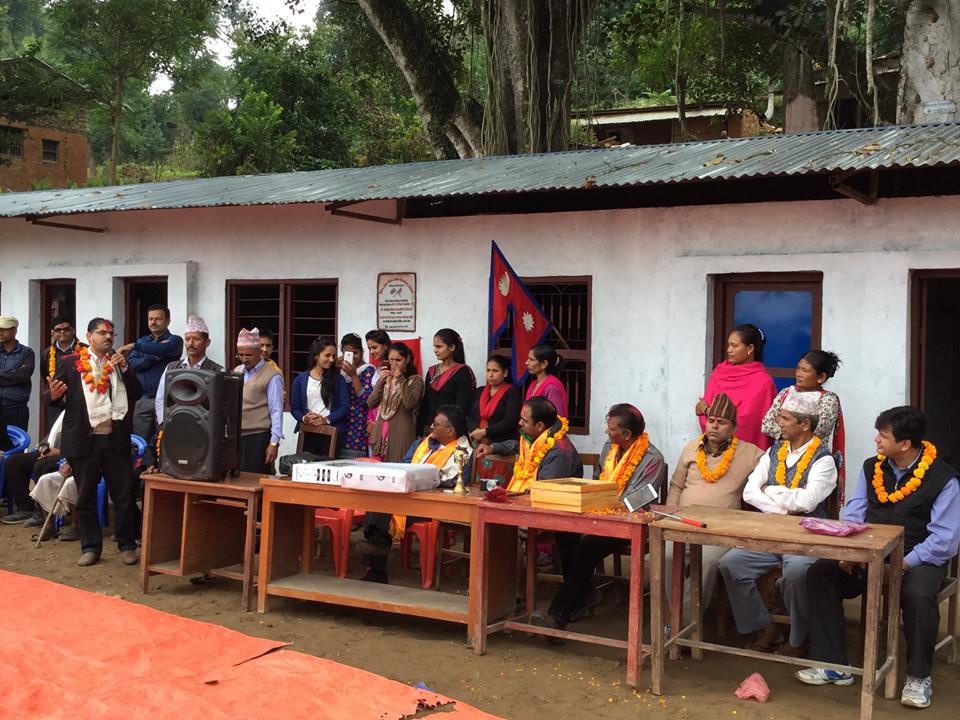
Handing over
The handover ceremony at one of the schools we helped build.
How we run our business
Local people, local produce
All our staff are employed locally, and our guides know the customs of the places they lead you through. We buy local food and supplies wherever we can.
A light footprint
We run our treks and tours with care not to disturb the local ecology or way of life, take part in national and local environmental initiatives, and organise village clean-up campaigns with local people.
Giving back
We contribute part of each year's profit to rural development projects, and work with non-government organisations that bring health and education services to remote parts of Nepal.
New routes, shared benefits
We have opened treks to less visited areas such as Simikot, Bajhang, Khaptad and Rara, and the Ganesh Himal, where we work with village communities on homestays so that trekking income stays in the valley.
Travelling responsibly with us
Culture and etiquette
- Dress modestly, covering shoulders and knees, especially at temples and monasteries.
- Ask before photographing people, and respect a no.
- Walk clockwise around stupas and prayer walls, and remove shoes where asked.
- Public displays of affection and raised voices cause offence; patience goes a long way.
Gifts and giving
- Please do not hand out sweets, money or pens to children on the trail; it encourages begging.
- If you want to help, give through a school, clinic or project. Your guide or our office can suggest one.
Shopping and eating
- Eat local food and buy from local shops and craftspeople, so your money stays in the community.
- Do not buy products made from wildlife or antiques that cannot legally leave the country.
Waste, water and energy
- Carry out what you carry in, and use the bins in towns.
- Refill a bottle with purified or boiled water instead of buying plastic bottles.
- Use toilets where they exist; on the trail, go well away from water and bury waste.
- Take short showers and turn off lights and chargers; lodges run on limited solar and hydro power.
Wildlife
- Keep your distance from animals, do not feed them, and stay on the trail.