Myanmar, Cambodia and Laos Tour

Myanmar, Cambodia and Laos

  • 14 days
Duration
14 days
Group size
15 people
Country
Cambodia

Myanmar, Cambodia and Laos Tour Overview

Myanmar, Cambodia and Laos

This journey takes you to the remains of some of South East Asia's great past empires. The multi-country trip visits Myanmar, Cambodia and Laos, starting in Yangon and ending in Luang Prabang.

Join Earthbound Expeditions on this tour of the highlights of Myanmar, Cambodia and Laos. It combines World Heritage Sites, natural landmarks and small villages in one trip, along with the local food and drink.

You see the natural beauty of the mountains of Laos and the floating farms and villages of Inle Lake (Myanmar). You visit the ancient temple sites of Angkor Wat (the largest temple in the world) and Bagan (with over 3,100 temples and stupas in one place).

You have time to relax in Luang Prabang (Laos), where you can watch the monks collecting alms. You visit many temples decorated in gold and can shop at the night markets in Luang Prabang (Laos) and Siem Reap (Cambodia).

After a long day of touring, you can book a spa treatment. South East Asia is known for its massage and Ayurvedic spa treatments.

Highlights

Myanmar: The Shwedagon Pagoda in Yangon, the temples of Bagan, the historic capital of Mandalay and the floating farms and villages of Inle Lake. Optional additions: a tour of the Golden Rock, a beach stay on the Myanmar coast and extra days at any location.

Cambodia: Angkor Wat and the market of Siem Reap. Optional additions: extra days at Angkor Wat and a tour of Tonle Sap Lake.

Laos: The temples of Luang Prabang and the monks collecting alms. Optional additions: the night market, Kuang Si Falls and a tour of the hill tribes.

This trip offers a broad introduction to the region in a single journey.

For enquiries, please email us at earthbound@wlink.com.np

This itinerary can be customised to suit your travel needs and schedule.

Country information

Myanmar

Myanmar has been opening up after a long period of isolation. Sanctions have been lifted, democracy is developing, and visitors and businesses from around the world have arrived. The country is still largely free of Western franchises, and many local people still wear traditional clothes.

As a traveller, you can now use ATMs in most places, stay in good-quality accommodation and rely on flights running on time. Local people are welcoming, and the history and natural beauty of the country remain intact.

The country is scattered with gilded pagodas, and traditional Asian ways of life continue. You will meet local people who are keen to make your stay enjoyable, to learn about the rest of the world and to show you what Myanmar has to offer.

At the ancient temple site of Bagan you see over 3,100 temples and stupas in one place. Bagan was founded in the 9th century, and building continued until the 15th century. As a destination, it ranks with Angkor Wat and Machu Picchu. The site covers approximately ten square kilometres (2,500 acres) and originally had over 10,000 temples and stupas. You can make a side trip to a lacquerware workshop; Bagan lacquerware, from furniture to dishes, is known worldwide.

The Shwedagon Pagoda in Yangon, also known as the Great Dagon Pagoda or the Golden Pagoda, is a gilded stupa 99 metres (325 ft) tall. Myanmar is rich in natural resources, including gold, which was used generously in this temple and across the country. What appears to be gold in photographs is real gold. We recommend a visit at night, when the gold shines under the lights and there are fewer people, so you can appreciate the devotion that went into its construction.

A visit to Myanmar should include Inle Lake. It is a relatively shallow lake (2.1 to 3.7 metres, 7 to 12 ft deep) in the hills of Myanmar, where local people have built villages and farms that float on the water. As you cross the lake in a small boat, you see how people have adapted to life on the water, along with ancient and modern temples. Visit the Phaung Daw Oo Pagoda, where it is a tradition to add gold leaf to the Buddha statues, which has turned them into 5 large lumps of gold with the statues underneath. You can visit the Jumping Cat Monastery (the cats no longer jump, but the monastery is still worth seeing), or a monastery built hundreds of years ago that is still in use.

Mandalay was once the capital of the ancient Burmese empire. The Golden Rock at Mt Kyaiktiyo balances on the edge of a drop. These are all important Buddhist sites in a country where monks are highly respected and most men spend at least part of their life in a monastery.

You can enjoy the local fish and food, and buy locally made linens and clothing, some of them made from lotus fibre. There are local wines and cigars, and the spice market is well worth a visit.

Cambodia

Cambodia has gone from the height of one of the most powerful empires in Asian history (the Khmer Empire ruled until the end of the 14th century), through colonisation by the French, to the bombings of the Vietnam War and the terror of the Khmer Rouge. Today it is a country with a warm, friendly population who are keen to engage with the world, and historical sites that are among the finest in Asia and the world.

A visit to Cambodia centres on Angkor Wat. Angkor was the capital of the Khmer Empire, which covered most of South East Asia, and its kings built temples to match. It is the largest temple complex, and Angkor Wat is the largest single temple in the world, often compared to Machu Picchu and Petra. Angkor Wat was built in the early 12th century and is often called the eighth wonder of the world. Photographs cannot fully convey the experience of exploring this huge structure. We recommend a visit at sunrise for the view, which also lets you tour the temple in the cool of the morning before the crowds arrive (allow several hours).

Your next stop is Angkor Thom, built later in the 12th century after the country converted to Buddhism. It was designed to be as grand as Angkor Wat and to establish Buddhism as the new religion. It has 54 towers with four faces each, a total of 216 faces of the Buddha. At Ta Prohm, where the Tomb Raider films were made, the ruins are still largely overgrown with trees and vines, and exploring them is an adventure in itself.

Laos

Laos was once overlooked by visitors heading to Angkor Wat and Vietnam, but it is now becoming known for its natural beauty and traditional way of life. It is a good place to relax, eat well, try Lao Lao like a local and see an environment that is still largely unspoilt. It is not yet crowded with tourists.

Relaxed and friendly Luang Prabang is the centre of your visit to Laos. This quiet town lies in the mountains of northern Laos beside the Mekong River and has a great deal to offer. Start the day early to watch the local monks walking the streets collecting alms. After breakfast, follow them back to the temples and monasteries, which are built in a distinctive Lao style with sweeping, low roofs. End the day at the night market and with dinner, followed by a glass of Lao Lao (local rice whisky).

Walk to the top of Phou Si Hill for sunrise or sunset over the Mekong River valley, and visit the Wat Tham Phou Si temple. A short drive from town, you can visit an elephant sanctuary (where you may be able to help wash the elephants) or swim at Kuang Si Falls, which drop 60 m (200 ft) and then cascade down the hillside through turquoise travertine pools. You can also stop at the local bear rescue centre to see Asian black bears up close.

The influence of French colonisation remains in the many bakeries, coffee houses and French restaurants. On a morning walk to breakfast you pass old French buildings, with the smell of coffee and fresh bread mixed with local spices. You can choose between a croissant and yoghurt or a spicy noodle soup, or try both, with plenty of fresh fruit, juice and strong coffee.

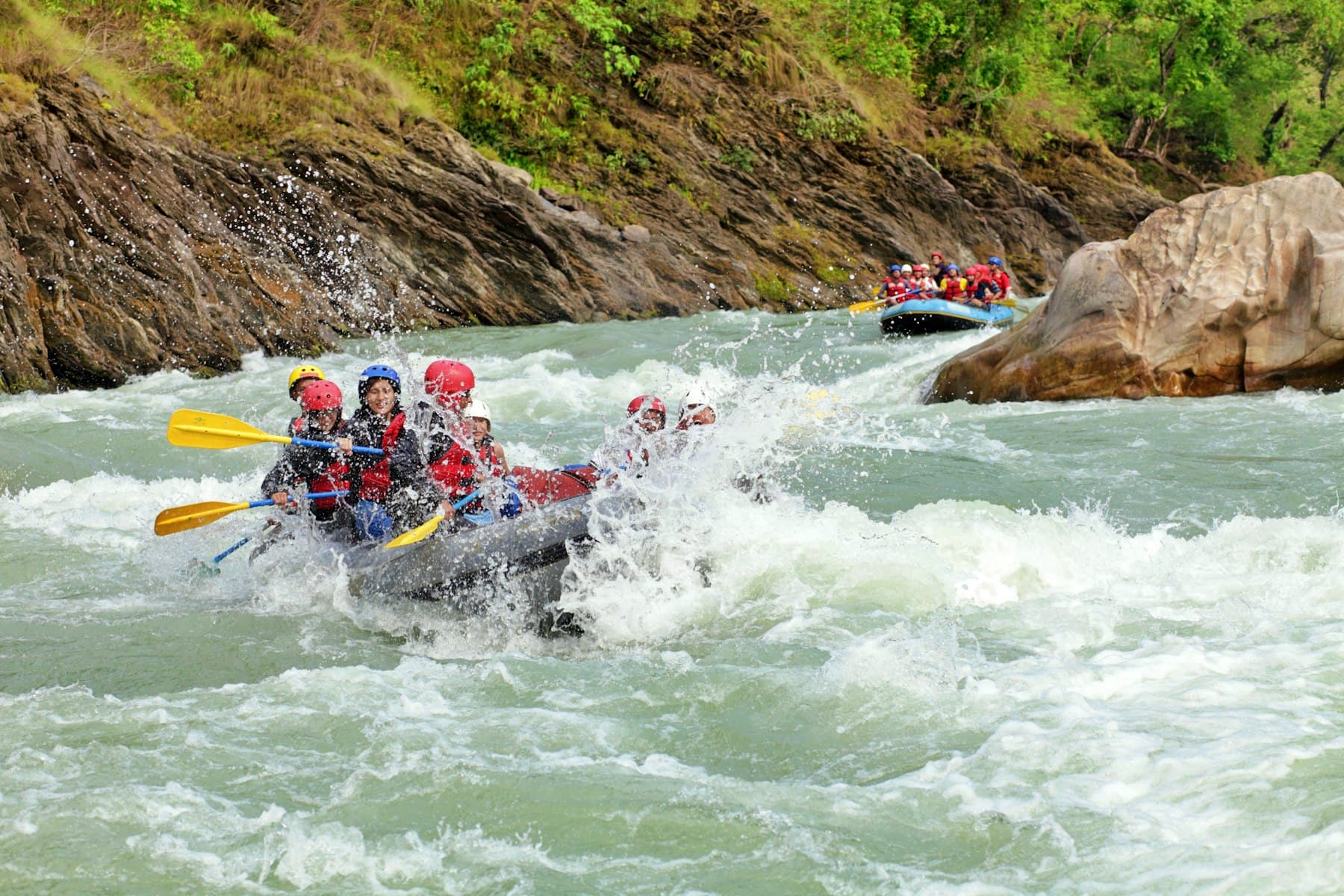
Adventure activities are also available, including zip-lining, white-water rafting, off-road tours and mountain biking.

You can extend your visit with a hike through the mountains or a visit to one or more of the hill tribes, where local culture has changed little with the modern world. You can take a boat trip down the Mekong River and watch the landscape change from mountains to flatlands with coconut trees and rice fields. We can also arrange a side trip to Vientiane, a quiet and relaxed capital city, with its French villas and café culture, where you can join the morning exercise by the river.

Key highlights of the Myanmar, Cambodia and Laos Tour

Itinerary

  1. On arrival in Yangon, your local tour guide meets you and takes you to your hotel to leave your luggage. You then start exploring Yangon's colonial city centre, including Maha Bandula Park and the Town Hall near the Sule Pagoda, which dates back over 2,000 years. Next, visit the Bogyoke Aung San Market (Scott Market) for souvenir shopping (it is closed on Mondays) and Chaukhtatgyi, a large reclining Buddha image. In the afternoon, visit the Shwedagon Pagoda, made famous by Rudyard Kipling and one of Myanmar's most sacred places. The large bell-shaped stupa is plated with gold, and its tip is set with diamonds, rubies and sapphires. After a photo stop at Karaweik Hall, a floating barge shaped like a hamsa bird on Kandawgyi Lake, you see the reflection of the Shwedagon Pagoda across the lake. We drive back to the hotel at sunset. Overnight at the hotel.

    Altitude
    30 m
    On foot
    Easy walking, 2–3 hrs
    Night in
    Hotel, Yangon
    Meals
    None
  2. After an early breakfast at the hotel, transfer to the airport for your flight to Bagan. On arrival, begin your Bagan tour with a visit to the busy Nyaung U Market. You then visit some of Bagan's important archaeological sites, including the Shwezigon Pagoda with its bell-shaped stupa and the Htilominlo Temple with its delicate plaster carvings and glazed sandstone decoration. Continue to a lacquerware workshop to see a demonstration of this traditional craft by a skilled artisan. See the mural paintings, protected by UNESCO, at the Myinkaba Gubyaukgyi Temple, and watch the sunset from the Shwesandaw Pagoda. Overnight in Bagan.

    Altitude
    50 m+20 m
    On foot
    Easy walking, 2–3 hrs
    Night in
    Hotel, Bagan
    Meals
    Breakfast
  3. Breakfast at the hotel. We visit the Nanpaya Temple, which is known for its fine masonry and interior design. It shows the strong Brahman influence on the Theravada Mon kings. Look out for the relief of the god Brahma: three of its faces can be seen, each with typical Mon features. These are said to represent King Manuha. The temple is sometimes called the Ganesh or Mahapeine Temple, after the elephant-headed Hindu god whose image once stood at the corners of its five diminishing rectangular terraces. In the afternoon, sightseeing continues at temples where many old murals and friezes can still be seen, as well as several old horoscopes painted to protect the building from damage. We then visit the Ananda Temple, built in 1091 and considered the masterpiece of Mon architecture. In the evening, we board a local boat for a slow sunset cruise on the Irrawaddy River. From the boat you see the daily life of fishermen and riverside villagers and a different view of Bagan's temples. Overnight in Bagan.

    Altitude
    50 m
    On foot
    Easy walking, 3–4 hrs
    Night in
    Hotel, Bagan
    Meals
    Breakfast
  4. After an early breakfast, transfer to the airport for your flight to Heho on the Shan plateau. On arrival, we drive to Nyaungshwe, the gateway to Inle Lake. You see the leg-rowing fishermen and their floating gardens, which are built up from strips of water hyacinth and mud and anchored to the lake bed with bamboo poles. Visit Nga Hpe Chaung Monastery, which houses dozens of Shan Buddha images. Continue to Phaung Daw Oo Pagoda, the lake's main shrine, which contains five sacred Buddha images covered in gold leaf. We look at the local crafts of Inle Lake with a stop at a cheroot workshop, where traditional Burmese cigars are made by hand. We can also visit a local silk weaving workshop, built on stilts over the lake, where old-style hand looms are still used. Overnight at Inle Lake.

    Altitude
    880 m (2,890 ft)+830 m
    On foot
    Easy walking, 1–2 hrs
    Night in
    Hotel, Inle Lake
    Meals
    Breakfast
  5. Inle Lake and Indein (B). After breakfast at the hotel, visit Nga Hpe Chaung Monastery, which houses dozens of Shan Buddha images. Continue to Phaung Daw Oo Pagoda, the lake's main shrine, which contains five sacred Buddha images covered in gold leaf. We look at the local crafts of Inle Lake with a stop at a cheroot workshop, where traditional Burmese cigars are made by hand. We can also visit a local silk weaving workshop, built on stilts over the lake, where old-style hand looms are still used. We continue sightseeing on the lake with a visit to Indein village and its 17th-century pagodas. Indein is a small village on the western shore of Inle Lake. A Buddha image is enshrined in a whitewashed stupa on the summit of a hill. Around the hill below the stupa are hundreds of ancient stupas, most of them ruined and overgrown with bushes. The pagoda hill is quiet and calm, with a cool breeze and the sound of the bells hanging from the stupa's umbrella. The view from the top is a good reward for the climb. Indein lies at the end of the Indein creek, which joins Inle Lake just after the Phaung Daw Oo Pagoda. The creek is narrow, with many twists and turns. Paddy fields line both banks, and you can see farmers ploughing and harrowing with water buffaloes. In many places, farmers dam the creek with bamboo barriers to irrigate the paddy fields. The water of Indein creek is used not only for irrigation but also for bathing and washing clothes, and you will see novice monks, young buffalo herders and village girls washing and swimming in the creek. Overnight at Inle Lake.

    Altitude
    880 m (2,890 ft)
    On foot
    Easy walking, 2–3 hrs
    Night in
    Hotel, Inle Lake
    Meals
    Breakfast
  6. After breakfast at the hotel, transfer to Heho airport for the flight to Mandalay. On arrival at Mandalay airport, drive to the ancient capital of Amarapura, the City of Immortality. Here you visit Bagaya Monastery, with its well-known collection of Buddha images, local weaving workshops and the two-century-old U Bein teak bridge on Taungthaman Lake. At Mahagandayon Monastery, you watch thousands of monks take their last meal of the day at 10:00 am in complete silence. Continue to Mandalay and check in at the hotel. After some rest, you take a sightseeing tour of Mandalay, including the Mahamuni Pagoda with its lifelike Buddha image. Mandalay was the last royal capital of Myanmar, which makes it the best place to see traditional arts and crafts. Visit a gold leaf workshop to see how gold leaf is made by hand in the traditional way. Continue to the Old Palace grounds; the Kuthodaw Pagoda, known as the world's largest book for its 729 marble slabs inscribed with the Buddha's teachings; and the Golden Palace Monastery, known for its fine wood carvings. Finish with the panoramic view of the city from Mandalay Hill. Overnight at the hotel.

    Altitude
    80 m−800 m
    On foot
    Easy walking, 2–3 hrs
    Night in
    Hotel, Mandalay
    Meals
    Breakfast
  7. After breakfast at the hotel, we drive to the former capital of Amarapura and visit Mahagandayon Monastery, where more than a thousand monks live and study the Buddhist scriptures. We also visit U Bein Bridge, the world's longest teak bridge. We then cross the bridge over the Irrawaddy River to Sagaing. Covered with 600 white-painted pagodas and monasteries, Sagaing Hill is widely regarded as the religious centre of Myanmar and is home to 3,000 monks and 100 meditation centres. In the early afternoon, you are transferred to the airport for the flight to Siem Reap via Bangkok. Connecting flights: MDL-BKK by PG 1405-1630, BKK-REP by PG 1750-1845. Siem Reap is the gateway to the Angkor temple complex and the legacy of the Khmer Empire. On arrival, your local English-speaking Cambodian guide meets you and transfers you to your hotel to check in. On the way, your guide gives you a briefing on the history, culture, people and way of life of Cambodia.

    Altitude
    20 m−60 m
    On foot
    Easy walking, 2–3 hrs
    Night in
    Hotel, Siem Reap
    Meals
    Breakfast
  8. After breakfast at the hotel, we begin the day at Ta Prohm temple, where ancient stones and large tree roots have grown over the ruins. With the trees, the stonework and the sound of birds, it is a good place to start the temple tour. We spend about an hour walking through this jungle temple before continuing to the ancient city of Angkor Thom. After exploring this walled city, we visit the Bayon temple, which stands in the middle of Angkor Thom and is known for the hundreds of smiling faces carved into its large sandstone blocks. It is one of the most popular and striking temples in the complex. We then visit the Baphuon, a hilltop pyramid temple dedicated to the god Shiva, which reopened to the public recently after restoration. We also visit the Terrace of the Elephants and the Terrace of the Leper King, the royal enclosure temple of Phimeanakas and the Preah Pithu group of smaller temples. We walk along the ancient city walls and stop for a hot Cambodian-style picnic lunch in a shaded area, or lunch at a local restaurant. After Angkor Thom, we visit Angkor Wat, the most important monument of the Khmer Empire. The temples of Angkor were built to show the wealth and power of the Khmer Empire at the time. Many stone inscriptions describing the founding of the temples have been found, but the Khmers left no record of how the empire collapsed. Our experienced guide explains the stories and legends behind the carved sandstone bas-reliefs, gables and lintels. You walk around this large monument to see its architecture and engineering, and watch the sunset over the temples before returning to the hotel. Overnight in Siem Reap.

    Altitude
    20 m
    On foot
    Easy walking, 3–4 hrs
    Night in
    Hotel, Siem Reap
    Meals
    Breakfast
  9. Optional: an early start to enter the Angkor Archaeological Park and watch the sunrise behind Angkor Wat, with soft light on the towers reflected in a large lily pond. This is one of the best views of the temple. We then return to the hotel for breakfast before visiting Preah Khan Temple. It lies 2 kilometres northeast of Angkor Thom on the Grand Circuit and was built in the second half of the 12th century, in AD 1191, by King Jayavarman VII, who dedicated it to his father Dharanindravarman. Inscriptions indicate that Preah Khan was built on the site of the battle in which King Jayavarman VII finally defeated the Chams. At that time it was known as Nagarajayacri, meaning the City of the Sacred Sword. Leaving by the rear exit of Preah Khan, we walk for approximately 3.5 km through dense tropical jungle along tree-lined paths, stopping for a rest and a drink of water at the French dam, which was built in 1960. We continue to Prasat Tanai, a 12th-century temple set deep in the jungle that receives very few visitors. It was built by King Jayavarman VII and dedicated to his ancestors. If time permits, we visit the pyramid temple of Ta Keo. In the afternoon, you transfer to the floating village on the Tonle Sap Lake. On the way you pass rice paddies and see the daily life of the local people. Here we board a long-tail wooden boat to the floating village, and the boatman takes you through the freshwater mangrove forest. Return to the hotel to freshen up before dinner. Tonight, dinner is accompanied by a classical Apsara dance performance depicting scenes from Khmer mythology. Overnight in Siem Reap.

    Altitude
    20 m
    On foot
    Easy walking, 3–4 hrs
    Night in
    Hotel, Siem Reap
    Meals
    Breakfast
  10. A free morning to relax in Siem Reap. Check out of the hotel at midday. In the late afternoon, a private driver picks you up and transfers you to the airport for the short flight to Luang Prabang (VN930 REP-LPQ 1655 1855). Luang Prabang was the first capital of the ancient Lane Xang kingdom. It is the centre of religious life in Laos and a World Heritage City. On arrival, your local guide meets you at the airport and transfers you (30 minutes) to the hotel to check in. The evening is free. Overnight in Luang Prabang.

    Altitude
    300 m (980 ft)+280 m
    On foot
    None, flight day
    Night in
    Hotel, Luang Prabang
    Meals
    Breakfast
  11. In the morning we tour the city's temples, starting with the National Museum in the former Royal Palace. It houses a collection of valuable objects, including the Prabang Buddha statue and gifts from foreign dignitaries. The tour continues to Wat Visoun, which was entirely rebuilt in 1887 after it was destroyed by the invading Black Flags from southern China. In the courtyard of Wat Visoun stands the Watermelon Stupa, named after the fruit it resembles. We also visit Wat Aham, where you find the altar of Luang Prabang, and finish at Wat That, where the ashes of King Sisavang Vong are kept. After lunch, we take a long-tail boat on the Mekong River to the Pak Ou Caves, set in a limestone cliff opposite the mouth of the Nam Ou river where it joins the Mekong. We visit Ban Xanghai, known for its traditional Laotian rice. On the return to Luang Prabang, we visit Ban Xangkhong, a village known for its handmade paper and naturally dyed silk weaving. Overnight in Luang Prabang.

    Altitude
    300 m (980 ft)
    On foot
    Easy walking, 2–3 hrs
    Night in
    Hotel, Luang Prabang
    Meals
    Breakfast
  12. You have the option of visiting a local market, followed by breakfast at the hotel. In mid-morning we leave the Old Town and drive to the Kuang Si Waterfall, a three-tier waterfall about 29 kilometres south of Luang Prabang. It is one of the main sights of the area. After touring the site, you can swim in the falls, so please bring swimwear if you would like to swim. After a picnic lunch near the falls, we drive back to town, stopping on the way at Ban Na Oune, a small Hmong village, and Tha Pane, a Khmu village. In the late afternoon, we climb Mount Phousi for the view over the town and the sunset. The rest of the day is free. Overnight in Luang Prabang.

    Altitude
    300 m (980 ft)
    On foot
    Easy walking, 2–3 hrs
    Night in
    Hotel, Luang Prabang
    Meals
    Breakfast, Lunch
  13. This morning we visit the Living Land Farm, a working community farm approximately 5 km outside the town. You learn about the rice-growing process and can take part in seasonal farm activities, such as selecting viable rice seeds, ploughing with a buffalo, planting by hand, weeding, harvesting and threshing. You may also pick vegetables from the organic garden or catch fish to cook for lunch, and you can try a variety of local rice products. In the afternoon we return to Luang Prabang and visit the UXO Laos Information Centre, where you learn about the history of Laos as the most heavily bombed country during the Indochina War. The rest of the day is free. You can relax or have a spa treatment or massage. Overnight in Luang Prabang.

    Altitude
    300 m (980 ft)
    On foot
    Easy walking, 2–3 hrs
    Night in
    Hotel, Luang Prabang
    Meals
    Breakfast, Lunch
  14. Breakfast is included, and check-out is at midday. The day is free until a private driver picks you up from the hotel and transfers you (30 minutes) to Luang Prabang airport for your departure flight.

    Altitude
    300 m (980 ft)
    On foot
    None, departure day
    Night in
    No overnight
    Meals
    Breakfast

What's included

  • 13 nights' accommodation in twin-share rooms with daily breakfast
  • English-speaking local guides, with a different guide at each site
  • Porter fees at the airport
  • All transfers and excursions in private air-conditioned vehicles with drivers
  • Sunset boat trip in Bagan
  • Private motorboat on Inle Lake (Myanmar), Tonle Sap Lake (Cambodia) and the Mekong River (Laos)
  • Entrance fees for the visits mentioned in the programme
  • Domestic and international flights between the countries on the itinerary

Not included

  • International flights and flights not mentioned in the itinerary
  • Meals not mentioned (B = breakfast, L = lunch, D = dinner)
  • Visas for Myanmar, Laos and Cambodia
  • Visits not mentioned in the programme
  • Drinks and personal expenses
  • Tips and porters at hotels
  • Any other items not mentioned
  • International departure airport tax in Yangon (currently USD 10 per person)
  • Guide and car service at Yangon International Airport on the departure day

Photos

A look at the trail, the villages and the mountains.

Reviews

Exceptional5.0 out of 5Reviews from Tripadvisor
  • 5836
  • 426
  • 32
  • 23
  • 11
Showing 10 reviews from 901 on Tripadvisor

Out of the World!!!!

July 2024, Tripadvisor

Kailash/Mansarovar July 2024. True professionals, Outstanding Hospitality. Rajanji and Staff take care of every individual and there needs. They have the experience to guide teams and keep them informed at each leg in the journey. Each day briefing is done on what to expect for the day. Wonderful and blessed to have travelled with Earthbound.

Mt Kailash Yatra experience with Earthbound Expeditions Rajan Team

July 2024, Tripadvisor

Rajan ji and his team is the best in every aspect of this trip and his team was totally dedicated to give Yatris best experience of Kailash and Manasasarover Yatra. They took care of us more than a family by checking health condition of everyone every day and making very yummay and healthy food in our Trip. Rajan ji is a great leader, singer, comedian and a spiritual guru himself. Myself along with my wife, cousin and friends were blessed to have his team in our spiritual journey of Mt Kailash

Jaya Chikka: Very compassionate and integrated team

July 2024, Tripadvisor

Jaya Chikka: very compassionate and integrated team with ver good english speaking skills. I have been to Manassarover and Kailash yatra with Earthbound team. Hotels provided are top hotels and the guest houses provided at the remote locations are comfortable. The tent arrangements at manasasarover to take quick hot bath with lake water and hommam are phenomenal. We got hot towels and hot water bags at manasarover and Kailash northface with bed coffee / tea. Served fresh breakfast / lunch and dinners all through the yatra. Supplied bottled water during the entire yatra. Rajan ji accommodated our request to arrange vehicles to go back to the hotel from nothface guest house instead of going on horse.. This saved our energy and time of about four to five hrs. We never missed anything in the trip. Team never lost their temper despite of all our requests on room services and last minute changes . They made sure everyone had food and required medicines everyday. They never rushed anyone during parikrama and allowed everyone to go on their own pace. Kudos to the team for their integrity. I wish the entire team to have many more successful yatras. I also congratulate the team for their charity work that is making an impactful and meaning to the needy people. Their efforts of giving back to the society is much appreciated !! Om namhasivaya !!!

Best agency in Nepal

May 2024, Tripadvisor

I was lucky to choose this agency of the list of agencies in the Lonely Planet guide. I did the EBC hike, a tour to Pokhara and Chitwan, and a Tibet roadtrip through Earthbound Expeditions and everything was AMAZING. They are very professional, they have the best staff and Mr. Rajan is always caring and pendant on any needs. I highly recommend this agency for any tour in Nepal. You will have an amazing time!

Didn't find what you were looking for?

Search every word on this page, or ask somebody who has walked the route.

14 days

Price on request

As featured on

  • The New York Times
  • The Guardian
  • Sydney Morning Herald
  • Lonely Planet
  • TripAdvisor
  • Mercury News
  • 13 News Israel
  • Action Asia Magazine
  • Apple Daily
  • Trails Worth Hiking

Our Partners

  • Kathmandu Day Trips
  • Thru Hikes Nepal
  • River Fun Beach Resort
  • Thamel Eco Resort
  • Nepal Yoga Retreat

Book Myanmar, Cambodia and Laos Tour