
from$467
Holi & Festival Cultural Tour
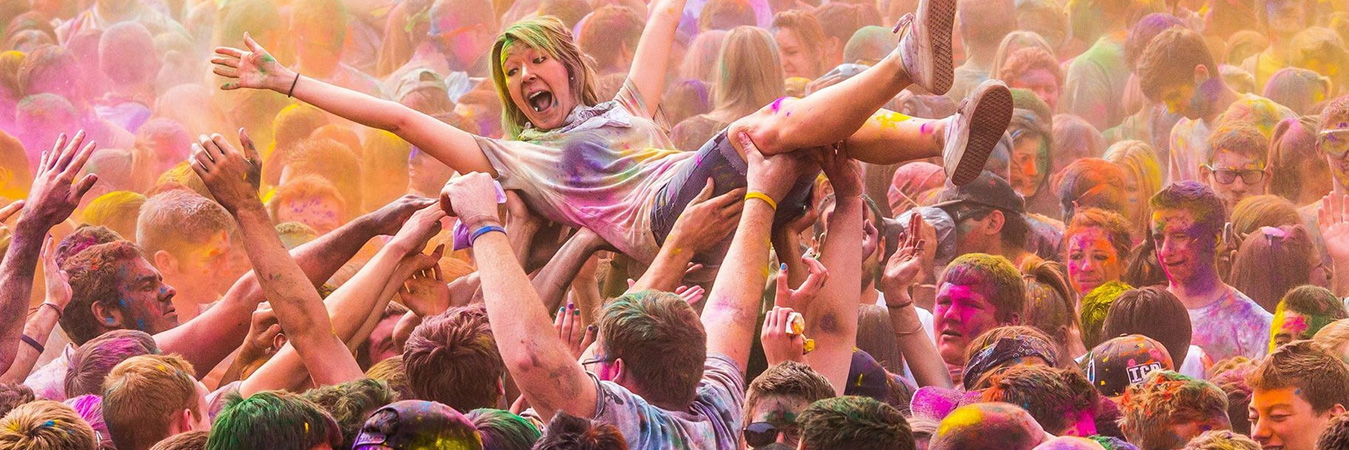
Celebrate the festival of colours across the living heritage cities of the Kathmandu Valley, with temples, palaces and local feasts.
- Duration
- 6 days
- Best time
- March, on the day of Falgun Purnima
- From
- $497
- Play Holi with local families
- UNESCO Durbar Squares tour
- Boudhanath & Pashupatinath temples
All treks
- Everest Base Camp16 days
- Annapurna Circuit14 days
- Manaslu Circuit15 days
- Upper Mustang20 days
- Langtang Valley10 days
- Kanchenjunga Trek
- Dolpo Region Trek
- Makalu Trek
Classic Everest Base Camp Trek
Follow the legendary trail through Sherpa villages, glacial moraines and Buddhist monasteries to the foot of the world's highest mountain.
- Duration
- 16 days
- Best time
- Mar to May, Sep to Nov
- From
- $1,867
- Stand at Everest Base Camp (5,364 m)
- Sunrise from Kala Patthar viewpoint
- Namche Bazaar & Tengboche Monastery
All expeditions
- Island Peak Climbing6,189 m
- Cho-Oyu Expedition8,188 m
- Mt Meru Climb
- Himchuli Peak6,441 m
- Chulu West Expedition
Island Peak Climbing
An ideal introduction to Himalayan mountaineering - combine the Everest trail with a guided ascent of Imja Tse (Island Peak).
- Duration
- 20 days
- Best time
- Apr to May, Oct to Nov
- From
- $2,697
- Summit Island Peak (6,189 m)
- Full climbing & rope training
- Everest Base Camp acclimatisation
All destinations
All destinationsUpper Mustang - A Lost Tibetan Kingdom
Journey into the walled city of Lo Manthang, a preserved fragment of ancient Tibet with ochre cliffs, cave monasteries and living Buddhist tradition.
- Duration
- 20 days
- Best time
- Mar to Nov
- From
- $2,387
- Walled capital of Lo Manthang
- Ancient cave monasteries & gompas
- Trans-Himalayan desert scenery
India and Nepal Tour
- Duration
- 12 days across two countries
- Grade
- Easy. No walking beyond sightseeing
- Max altitude
- 2,175 m (7,140 ft) at Nagarkot, for one night
- Start and end
- Delhi to Kathmandu, one way
- On foot
- Two or three hours a day around monuments
- Best season
- Oct to Mar. The plains are unbearable in May
- Accommodation
- Three-star hotels throughout, upgradeable
- Meals
- Breakfast daily, and most lunches and dinners
- Group size
- Up to 8, and it runs from 2
- Getting there
- Private car and driver in India, one flight to Kathmandu
Overview
Delhi, the Taj Mahal, the pink city of Jaipur, the temples at Khajuraho and the burning ghats of Varanasi, then over the border to the temple cities of the Kathmandu valley.
What the trip is
The classic north Indian circuit with the Himalaya on the end of it. Delhi, Jaipur and Agra are the Golden Triangle and are what most first visits to India consist of; Orchha, Khajuraho and Varanasi are the harder, older, better half that most itineraries drop for time. Then a flight north to Kathmandu, which after eight days on the plains is a different climate, a different pace and a different religion doing the same things in a different key.
Why Varanasi before Kathmandu, and not after
This is the sequencing decision the whole itinerary turns on. Pashupatinath in Kathmandu is a Hindu cremation ground on a river, and so are the burning ghats at Varanasi, and they are the two most important such places in the religion. Seen in that order, Pashupatinath on day 10 is legible in a way it simply is not to somebody who arrived in Nepal first. Reversing the trip saves nobody any money and costs you the connection.
Who it suits
Somebody who wants to look at things rather than walk to them. There is no trekking on this itinerary and no altitude worth the name. What it does ask for is stamina of a different kind: eight days of Indian cities in December is tiring in a way that has nothing to do with fitness, and the driving days are long. It is also the cheapest trip in this catalogue by a distance, which makes it a good first look at both countries.
The one hard day
Day 8, Khajuraho to Varanasi, is about nine hours in a car. It is the longest transfer we sell anywhere and there is a forty-minute flight that covers it. We keep the day as the company sells it and we will book the flight for anybody who asks, which is most people once they have read this. Whichever you choose, it is worth deciding at booking rather than at breakfast in Khajuraho.
Trip highlights
- The Taj Mahal at sunrise
- Amer Fort and the old city of Jaipur
- Dawn on the Ganges at Varanasi
- Four UNESCO sites in the Kathmandu valley
The whole trip on one screen
Twelve days and about 1,300 km of driving. Read the hours column rather than the altitude one, and look hard at day 8.
| Day | Route | Walking | Altitude |
|---|---|---|---|
| Day 1 | Arrive Delhi | — | 220 m (720 ft) |
| Day 2 | Old and New Delhi | — | 220 m (720 ft) |
| Day 3 | Drive to Jaipur, Amer Fort | 5 hrs, 270 km | 430 m (1,410 ft) |
| Day 4 | Drive to Agra, the Red Fort | 4–5 hrs, 240 km | 170 m (560 ft) |
| Day 5 | The Taj Mahal at sunrise | — | 170 m (560 ft) |
| Day 6 | Drive to Orchha | 5 hrs, 250 km | 230 m (750 ft) |
| Day 7 | Drive to Khajuraho, the temples | 4 hrs, 175 km | 280 m (920 ft) |
| Day 8 | Khajuraho to Varanasi, the long one | 9 hrs, or a 40 min flight, 400 km | 80 m |
| Day 9 | Dawn on the Ganges, fly to Kathmandu | 1h 15m flying | 1,400 m (4,590 ft) |
| Day 10 | Kathmandu valley sites, up to Nagarkot | — | 2,175 m (7,140 ft) |
| Day 11 | Sunrise, Bhaktapur, back to Kathmandu | — | 1,400 m (4,590 ft) |
| Day 12 | Fly home | — | — |
- Day 1
- Route
- Arrive Delhi
- Walking
- —
- Altitude
- 220 m (720 ft)
- Day 2
- Route
- Old and New Delhi
- Walking
- —
- Altitude
- 220 m (720 ft)
- Day 3
- Route
- Drive to Jaipur, Amer Fort
- Walking
- 5 hrs, 270 km
- Altitude
- 430 m (1,410 ft)
- Day 4
- Route
- Drive to Agra, the Red Fort
- Walking
- 4–5 hrs, 240 km
- Altitude
- 170 m (560 ft)
- Day 5
- Route
- The Taj Mahal at sunrise
- Walking
- —
- Altitude
- 170 m (560 ft)
- Day 6
- Route
- Drive to Orchha
- Walking
- 5 hrs, 250 km
- Altitude
- 230 m (750 ft)
- Day 7
- Route
- Drive to Khajuraho, the temples
- Walking
- 4 hrs, 175 km
- Altitude
- 280 m (920 ft)
- Day 8
- Route
- Khajuraho to Varanasi, the long one
- Walking
- 9 hrs, or a 40 min flight, 400 km
- Altitude
- 80 m
- Day 9
- Route
- Dawn on the Ganges, fly to Kathmandu
- Walking
- 1h 15m flying
- Altitude
- 1,400 m (4,590 ft)
- Day 10
- Route
- Kathmandu valley sites, up to Nagarkot
- Walking
- —
- Altitude
- 2,175 m (7,140 ft)
- Day 11
- Route
- Sunrise, Bhaktapur, back to Kathmandu
- Walking
- —
- Altitude
- 1,400 m (4,590 ft)
- Day 12
- Route
- Fly home
- Walking
- —
- Altitude
- —
Dates and prices
| Dates | Season | Places | Price | |
|---|---|---|---|---|
| 10 Oct 2026 to 21 Oct 2026 | Autumn 2026 | 5 places left | $1,297 | Reserve |
| 7 Nov 2026 to 18 Nov 2026 | Autumn 2026 | 3 places left | $1,297 | Reserve |
| 5 Dec 2026 to 16 Dec 2026 | Winter 2026 | Just opened | $1,247 | Reserve |
| 16 Jan 2027 to 27 Jan 2027 | Winter 2027 | Just opened | $1,247 | Reserve |
| 13 Feb 2027 to 24 Feb 2027 | Winter 2027 | 6 places left | $1,297 | Reserve |
| 8 Mar 2027 to 19 Mar 2027 | Holi 2027 | 2 places left | $1,447 | Reserve |
| 27 Mar 2027 to 7 Apr 2027 | Spring 2027 | 7 places left | $1,297 | Reserve |
| 9 Oct 2027 to 20 Oct 2027 | Autumn 2027 | Just opened | $1,297 | Reserve |
| 6 Nov 2027 to 17 Nov 2027 | Autumn 2027 | Just opened | $1,297 | Reserve |
| 4 Dec 2027 to 15 Dec 2027 | Winter 2027 | Just opened | $1,247 | Reserve |
- 10 Oct 2026 to 21 Oct 2026
- Season
- Autumn 2026
- Places
- 5 places left
- Price
- $1,297
- 7 Nov 2026 to 18 Nov 2026
- Season
- Autumn 2026
- Places
- 3 places left
- Price
- $1,297
- 5 Dec 2026 to 16 Dec 2026
- Season
- Winter 2026
- Places
- Just opened
- Price
- $1,247
- 16 Jan 2027 to 27 Jan 2027
- Season
- Winter 2027
- Places
- Just opened
- Price
- $1,247
- 13 Feb 2027 to 24 Feb 2027
- Season
- Winter 2027
- Places
- 6 places left
- Price
- $1,297
- 8 Mar 2027 to 19 Mar 2027
- Season
- Holi 2027
- Places
- 2 places left
- Price
- $1,447
- 27 Mar 2027 to 7 Apr 2027
- Season
- Spring 2027
- Places
- 7 places left
- Price
- $1,297
- 9 Oct 2027 to 20 Oct 2027
- Season
- Autumn 2027
- Places
- Just opened
- Price
- $1,297
- 6 Nov 2027 to 17 Nov 2027
- Season
- Autumn 2027
- Places
- Just opened
- Price
- $1,297
- 4 Dec 2027 to 15 Dec 2027
- Season
- Winter 2027
- Places
- Just opened
- Price
- $1,247
Most people go on their own dates
From a party of four it costs no more, and this itinerary flexes more easily than any other we sell: the hotels are city hotels with rooms most nights, the driving is private, and nothing depends on a permit office. Tell us the month. The two things worth planning around are Holi, which falls on a single date in March and books out, and the weather, which rules out May to September on the plains.
Ask for your own datesWhat it costs by party size
A guide and a porter cost the same whether they walk with one of you or eight, so the price per person falls as the party grows. Every one of these runs, including the first.
| Party size | Notes | Per person |
|---|---|---|
| 1 person | a single supplement on every hotel night | $1,890 |
| 2 to 3 | $1,420 | |
| 4 to 8 | the published price | $1,297 |
| 9 or more | a second vehicle and guide | $1,210 |
- 1 person
- Notes
- a single supplement on every hotel night
- Per person
- $1,890
- 2 to 3
- Notes
- Per person
- $1,420
- 4 to 8
- Notes
- the published price
- Per person
- $1,297
- 9 or more
- Notes
- a second vehicle and guide
- Per person
- $1,210
Itinerary
Day by day, with where you sleep and how far you walk.
Met at Indira Gandhi International with an Earthbound Expeditions board and taken to your hotel. Nothing is asked of you today: Delhi is a lot at the best of times and considerably more so after a long flight.
- Altitude
- —
- On foot
- —
- Night in
- Hotel, Delhi
- Meals
- Dinner
Two cities in a day and they could not be less alike. In the morning, Mughal Delhi: the Red Fort, the great courtyard of the Jama Masjid, and a walk or a rickshaw through the lanes of Chandni Chowk, which is as dense as anywhere on earth. In the afternoon, Lutyens' imperial capital, wide and quiet: India Gate, Rashtrapati Bhavan, the Parliament building, and Raj Ghat where Gandhi was cremated.
- Altitude
- —
- On foot
- —
- Night in
- Hotel, Delhi
- Meals
- Breakfast, Lunch, Dinner
About five hours south-west into Rajasthan, and the country changes as you go: drier, browner, and suddenly full of colour where the buildings are. In Jaipur, Amer Fort on its ridge above a lake, and the Hawa Mahal, the pink honeycomb of a facade built so the women of the court could watch the street unseen.
- Altitude
- —
- On foot
- —
- Night in
- Hotel, Jaipur
- Meals
- Breakfast, Lunch, Dinner
Four hours or so east, with a stop at the abandoned Mughal capital of Fatehpur Sikri if the timing allows. In Agra, the Red Fort: a working fortress and palace where Shah Jahan spent his last years imprisoned by his son, looking downriver at the tomb he had built for his wife.
- Altitude
- —
- On foot
- —
- Night in
- Hotel, Agra
- Meals
- Breakfast, Lunch, Dinner
At sunrise, which is when it is worth the early start: the marble takes the light differently every twenty minutes and the crowds arrive later. It is a tomb rather than a palace, built by Shah Jahan for Mumtaz Mahal, and the thing photographs never convey is the scale of the inlay work, thousands of pieces of semi-precious stone set flush into white marble.
- Altitude
- —
- On foot
- —
- Night in
- Hotel, Agra
- Meals
- Breakfast, Lunch, Dinner
Five hours south to a small town on the Betwa river that most itineraries skip, and should not. Orchha has palaces and cenotaphs from the Bundela kings standing half-empty above the water, and after Delhi, Jaipur and Agra it is the first place on this trip where you are not sharing a monument with two thousand people.
- Altitude
- —
- On foot
- —
- Night in
- Hotel, Orchha
- Meals
- Breakfast, Lunch, Dinner
Four hours east to the temples the Chandela dynasty built between about 950 and 1050, and left behind when the capital moved. What survives is around twenty of an original eighty-five, covered in some of the finest sculpture in India, a small and famous fraction of which is erotic and the rest of which is better.
- Altitude
- —
- On foot
- —
- Night in
- Hotel, Khajuraho
- Meals
- Breakfast, Lunch, Dinner
The hard day of the trip and we would rather say so: about nine hours on the road east to the Ganges. There is a forty-minute flight that does the same journey and we will book it for you if you would rather. Whichever way you arrive, the evening is the Ganga Aarti at Dashashwamedh ghat, where priests perform a fire ceremony to the river at dusk.
- Altitude
- —
- On foot
- Drive, 9 hrs, or a 40 min flight
- Night in
- Hotel, Varanasi
- Meals
- Breakfast, Lunch, Dinner
A rowing boat on the river before sunrise, past the bathing ghats and the burning ghats where cremations run continuously, which is the most affecting hour on this itinerary and is not a spectacle. Then the flight north to Kathmandu, and by evening you are in the Himalaya.
- Altitude
- 1,400 m (4,590 ft)
- On foot
- —
- Night in
- Hotel, Kathmandu
- Meals
- Breakfast, Dinner
Swayambhunath on its hill above the city, the river temples and cremation ghats at Pashupatinath, which will read very differently having seen Varanasi two days earlier, and the great dome at Boudhanath. In the afternoon up to Nagarkot on the valley rim for sunset over the mountains.
- Altitude
- 2,175 m (7,140 ft)+775 m
- On foot
- —
- Night in
- Hotel, Nagarkot
- Meals
- Breakfast, Lunch, Dinner
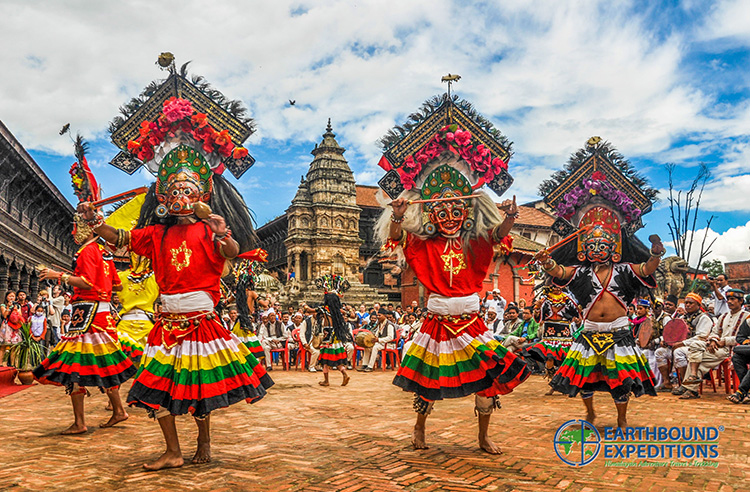
Up early for the Himalaya along the northern horizon, and on a clear morning Everest is on it. Then down to Bhaktapur, the best preserved of the valley's three medieval cities and worth a whole slow afternoon. A cultural show and a farewell dinner in Kathmandu in the evening.
- Altitude
- 1,400 m (4,590 ft)−775 m
- On foot
- —
- Night in
- Hotel, Kathmandu
- Meals
- Breakfast, Dinner
We take you to Tribhuvan International for your flight. If you are carrying on to a trek, this is where we hand you over to the trekking team.
- Altitude
- —
- On foot
- —
- Night in
- —
- Meals
- Breakfast
What's included
Included in Standard
- Airport transfers & ground transport
- Licensed English-speaking guide
- Accommodation throughout the trip
- All permits & national park fees
- Meals as per the itinerary
Not included
- International flights
- Travel & rescue insurance
- Personal trekking gear
- Tips & personal expenses
- Nepal entry visa (on arrival)
What to bring
For temples and mosques
- Long trousers or a long skirt, and sleeved tops. Shoulders and knees covered gets you into everything on this itinerary
- A scarf or shawl. Useful for covering your head at the Jama Masjid and for the dust in the car
- Slip-on shoes. You take them off at every temple and mosque, and you will do it a dozen times
- Socks you do not mind walking on hot stone in. Marble courtyards get very hot barefoot
For eight days of cities
- Comfortable shoes you have already worn in. Three hours a day on stone for a fortnight
- A day bag that closes properly, worn at the front in Chandni Chowk and on the Varanasi ghats
- A hat and sunglasses. Even in December the middle of the day is bright
- Hand sanitiser, and more of it than you think
For the two cold ends
- A warm layer for Delhi in December and January, which is colder indoors than out
- A fleece or light down jacket for Nagarkot, which is 2,175 m and will be near freezing at dawn
- A light waterproof, mostly for the shoulder months
Health
- Something for an upset stomach, and rehydration salts. Assume you will use them
- Your own prescriptions in original packaging, with a copy of the prescription
- Mosquito repellent, particularly for Varanasi and the Terai
- A refillable bottle, because the car carries bottled water and forty single-use bottles is a poor trade
Papers and money
- Passport valid six months with two blank pages, plus photocopies
- Your printed India e-Visa approval. Airlines ask for it on paper more often than they should
- Four passport photographs
- US dollars in clean notes for the Nepal visa on arrival
- A card for the hotels and rupees for everything else. Indian ATM withdrawal limits are low
- A universal adaptor: India and Nepal share type C and D, and India adds type M
Getting between the two countries
One international flight in the middle, three land borders you could use instead, and a long drive on day 8 that has an aeroplane alternative.
One flight in the middle
Varanasi to Kathmandu, about an hour and a quarter, and it is the only international flight inside the trip. Buddha Air and Nepal Airlines fly it, and it is what makes a Ganges-then-Himalaya itinerary work without doubling back through Delhi.
Day 8, and the flight that fixes it
Khajuraho to Varanasi is about nine hours by road. A forty-minute flight covers the same ground and costs $90 to $140. We keep the day as the company sells it because that is the price you are quoted, and we will book the flight for anybody who asks. Decide at booking rather than at breakfast in Khajuraho.
The land borders, if you prefer them
Sunauli near Bhairahawa for Varanasi and Lucknow, Raxaul near Birgunj for Patna and Bodhgaya, and Kakarbhitta in the east for Darjeeling. All three issue Nepali visas on arrival and all three accept the Indian e-Visa. All three also take a full day and considerably longer than the map suggests.
Getting to Delhi and home from Kathmandu
This trip is one way, so book an open-jaw ticket: into Delhi and out of Kathmandu. It usually costs the same as a return to either and it saves a wasted day. If your airline will not do it, Kathmandu to Delhi is an hour forty-five and there are several a day.
How much of this is driving
About 1,300 km across eight days in India, in a private air-conditioned car with a driver who stays with you throughout. Indian highways are better than their reputation and slower than their signposts. Nothing here is a bad road; there is simply a lot of it.
Where you sleep
11 nights, and what each one is
| Where | Nights | Type | Room | Bathroom |
|---|---|---|---|---|
| Delhi | 2 | Three-star hotel | Twin or double | Private, hot water |
| Jaipur | 1 | Three-star hotel, often a converted haveli | Twin or double | Private, hot water |
| Agra | 2 | Three-star hotel | Twin or double | Private, hot water |
| Orchha | 1 | Small hotel by the river | Twin or double | Private, hot water |
| Khajuraho | 1 | Three-star hotel | Twin or double | Private, hot water |
| Varanasi | 1 | Three-star hotel, near the ghats | Twin or double | Private, hot water |
| Kathmandu | 2 | Three-star hotel | Twin or double | Private, hot water |
| Nagarkot | 1 | Hill resort on the valley rim | Twin or double, mountain-facing | Private, hot water |
- Delhi
- Nights
- 2
- Type
- Three-star hotel
- Room
- Twin or double
- Bathroom
- Private, hot water
- Jaipur
- Nights
- 1
- Type
- Three-star hotel, often a converted haveli
- Room
- Twin or double
- Bathroom
- Private, hot water
- Agra
- Nights
- 2
- Type
- Three-star hotel
- Room
- Twin or double
- Bathroom
- Private, hot water
- Orchha
- Nights
- 1
- Type
- Small hotel by the river
- Room
- Twin or double
- Bathroom
- Private, hot water
- Khajuraho
- Nights
- 1
- Type
- Three-star hotel
- Room
- Twin or double
- Bathroom
- Private, hot water
- Varanasi
- Nights
- 1
- Type
- Three-star hotel, near the ghats
- Room
- Twin or double
- Bathroom
- Private, hot water
- Kathmandu
- Nights
- 2
- Type
- Three-star hotel
- Room
- Twin or double
- Bathroom
- Private, hot water
- Nagarkot
- Nights
- 1
- Type
- Hill resort on the valley rim
- Room
- Twin or double, mountain-facing
- Bathroom
- Private, hot water
Heat, hot water, power and signal
- Air conditioning
- In every Indian hotel and in the car. In October to March you will barely use it, which is the argument for those months.
- Heating
- Patchy in India and often absent in Kathmandu. Delhi in January is genuinely cold indoors and hotels are built for the summer.
- Hot shower
- Every night, everywhere. Nothing about this trip is rough.
- Wifi
- In every hotel, and Indian mobile data is fast and absurdly cheap. Nothing is blocked in either country.
- Phone signal
- Airtel or Jio in India, Ncell or NTC in Nepal. An Indian SIM needs your passport and takes twenty minutes; the guide can sort it on day 2.
- Water
- Bottled water in the car, included. Tap water is not drinkable in either country.
- Laundry
- Same-day in most hotels, charged by the piece, and cheap.
- Single rooms
- Available every night at a supplement. Unlike our treks, nothing here is twin-share by necessity.
What you eat
| Meal | Time | Usually |
|---|---|---|
| Breakfast | 7:00–9:00 | Hotel buffet. In India expect paratha, idli, poha and eggs alongside the toast |
| Lunch | 12:30–14:00 | On the driving days a highway restaurant, which in India is better than it sounds |
| Dinner | 19:30–21:00 | Mughlai in Delhi and Agra, Rajasthani in Jaipur, and thali almost everywhere |
| Tea | constantly | Masala chai from a roadside stall, in a clay cup where they still use them |
- Breakfast
- Time
- 7:00–9:00
- Usually
- Hotel buffet. In India expect paratha, idli, poha and eggs alongside the toast
- Lunch
- Time
- 12:30–14:00
- Usually
- On the driving days a highway restaurant, which in India is better than it sounds
- Dinner
- Time
- 19:30–21:00
- Usually
- Mughlai in Delhi and Agra, Rajasthani in Jaipur, and thali almost everywhere
- Tea
- Time
- constantly
- Usually
- Masala chai from a roadside stall, in a clay cup where they still use them
If you eat differently
| Diet | On this route |
|---|---|
| Vegetarian | The easiest country in the world for it. A third of India is vegetarian and menus mark it clearly, and Varanasi and Orchha are largely vegetarian towns. |
| Vegan | Harder than vegetarian, because ghee, paneer and curd are everywhere. Say so at booking and the guide orders around it; south Indian food is the reliable answer. |
| Jain | Well understood and easily catered for in India, and we will tell the hotels in advance. Harder in Kathmandu, where it needs planning rather than a word to the cook. |
| Gluten free | Rice, dal and most south Indian food are safe. Roti, naan, paratha and anything battered are not. |
| Halal | Widely available in Delhi, Agra and Varanasi, and the guides know where. Less so in Jaipur and Orchha. |
| Heat | Say something on day 1. Every kitchen on this route can turn the chilli down and none of them will guess that you want them to. |
- Vegetarian
- On this route
- The easiest country in the world for it. A third of India is vegetarian and menus mark it clearly, and Varanasi and Orchha are largely vegetarian towns.
- Vegan
- On this route
- Harder than vegetarian, because ghee, paneer and curd are everywhere. Say so at booking and the guide orders around it; south Indian food is the reliable answer.
- Jain
- On this route
- Well understood and easily catered for in India, and we will tell the hotels in advance. Harder in Kathmandu, where it needs planning rather than a word to the cook.
- Gluten free
- On this route
- Rice, dal and most south Indian food are safe. Roti, naan, paratha and anything battered are not.
- Halal
- On this route
- Widely available in Delhi, Agra and Varanasi, and the guides know where. Less so in Jaipur and Orchha.
- Heat
- On this route
- Say something on day 1. Every kitchen on this route can turn the chilli down and none of them will guess that you want them to.
What a day is like
A day on the trail
- 6:00On the two mornings that matter, the Taj and the Ganges, you are out before the sun
- 8:00Breakfast in the hotel on the ordinary days
- 9:00Out with the local guide, or on the road if it is a driving day
- 12:30Lunch. On a driving day this is a highway restaurant and it is part of the trip
- 14:00The afternoon site, or the rest of the drive
- 17:00Check in, or the evening ceremony. The Ganga Aarti at Varanasi is at dusk
- 19:30Dinner, and the guide talks through tomorrow
- 21:30Bed, or a walk. Indian cities are alive at that hour in a way European ones are not
How hard it is, and getting ready
The easiest trip we sell, and eight days of Indian cities is still tiring.
1 of 5- No trekking, no altitude and no day that asks anything of your legs beyond two or three hours around a monument.
- About 1,300 km of driving across eight days, with day 8 at nine hours unless you take the flight.
- Two early starts that are worth it: the Taj at sunrise and the Ganges before dawn.
- A lot of steps at Amer Fort, the Jama Masjid and the Khajuraho temples, and none of them are long.
- What actually tires people is the heat, the noise and the density rather than anything physical. October to March is the answer.
Twelve weeks, and what to do in each of them
Written for somebody who walks a bit and does not train. If you already run or cycle regularly, start at the eight-week block. Nothing here needs a gym.
- 1
Eight weeks out
See a travel clinic
Typhoid, hepatitis A and tetanus are the standard recommendations for India, and rabies is worth discussing. None of it is mandatory and all of it is easier eight weeks out than two.
- 2
Four weeks out
Apply for the e-Visa
Two to five days to process and it can be filed up to 120 days ahead, so there is no reason to leave it. Use indianvisaonline.gov.in and nothing else. The photograph fails more applications than anything else: white background, square, no glasses.
- 3
Two weeks out
Walk a bit, and break in shoes
This is not a fitness trip and you will still be on your feet three hours a day on stone. Comfortable shoes you have already worn are worth more than any amount of training.
- 4
The week before
Decide about day 8
Nine hours in a car or a forty-minute flight for $90 to $140. It is the single decision on this trip that most changes how the second half feels, and it is better made now than at breakfast in Khajuraho.
Month by month
Written for the Indian plains, which is where eight of the twelve days are. Kathmandu is milder than every figure below.
| Month | Day on the plains | Night on the plains | Kathmandu, by day | What it is like | |
|---|---|---|---|---|---|
| January | +20°C | +7°C | +19°C | Good | Cool and pleasant by day, genuinely cold at night, and Delhi fog delays flights and trains most mornings. |
| February | +24°C | +11°C | +21°C | Best | The best month on the plains. Warm days, cool nights, and the fog has gone. |
| March | +30°C | +16°C | +25°C | Best | Warm and clear, and Holi falls here. The last comfortable month in Rajasthan. |
| April | +36°C | +22°C | +28°C | Hard | Hot. Agra and Jaipur are over 35°C by mid-morning. The e-Visa is $10 rather than $25 for a reason. |
| May | +40°C | +27°C | +30°C | We do not run it | We do not run this itinerary. Delhi and Agra reach 45°C and there is no pleasure in it. |
| June | +39°C | +28°C | +30°C | We do not run it | As May, with humidity on top as the monsoon builds. |
| July | +35°C | +27°C | +29°C | Hard | Monsoon. Cooler and very humid, with flooding on the Ganges at Varanasi. |
| August | +34°C | +26°C | +29°C | Hard | As July. The ghats at Varanasi are often partly underwater and boats are restricted. |
| September | +34°C | +24°C | +28°C | Hard | Clearing through the month and still humid. Workable from about the 25th. |
| October | +32°C | +19°C | +26°C | Best | The season opens properly. Warm, clear and washed clean, and Diwali usually falls here. |
| November | +27°C | +12°C | +23°C | Best | Excellent, and the clearest month in Kathmandu. Our own favourite for this trip. |
| December | +22°C | +8°C | +20°C | Good | Cool and bright, and the Delhi fog starts. Hotels are not heated and January nights are colder indoors than out. |
- January
- Day on the plains
- +20°C
- Night on the plains
- +7°C
- Kathmandu, by day
- +19°C
- What it is like
- Cool and pleasant by day, genuinely cold at night, and Delhi fog delays flights and trains most mornings.
Good - February
- Day on the plains
- +24°C
- Night on the plains
- +11°C
- Kathmandu, by day
- +21°C
- What it is like
- The best month on the plains. Warm days, cool nights, and the fog has gone.
Best - March
- Day on the plains
- +30°C
- Night on the plains
- +16°C
- Kathmandu, by day
- +25°C
- What it is like
- Warm and clear, and Holi falls here. The last comfortable month in Rajasthan.
Best - April
- Day on the plains
- +36°C
- Night on the plains
- +22°C
- Kathmandu, by day
- +28°C
- What it is like
- Hot. Agra and Jaipur are over 35°C by mid-morning. The e-Visa is $10 rather than $25 for a reason.
Hard - May
- Day on the plains
- +40°C
- Night on the plains
- +27°C
- Kathmandu, by day
- +30°C
- What it is like
- We do not run this itinerary. Delhi and Agra reach 45°C and there is no pleasure in it.
We do not run it - June
- Day on the plains
- +39°C
- Night on the plains
- +28°C
- Kathmandu, by day
- +30°C
- What it is like
- As May, with humidity on top as the monsoon builds.
We do not run it - July
- Day on the plains
- +35°C
- Night on the plains
- +27°C
- Kathmandu, by day
- +29°C
- What it is like
- Monsoon. Cooler and very humid, with flooding on the Ganges at Varanasi.
Hard - August
- Day on the plains
- +34°C
- Night on the plains
- +26°C
- Kathmandu, by day
- +29°C
- What it is like
- As July. The ghats at Varanasi are often partly underwater and boats are restricted.
Hard - September
- Day on the plains
- +34°C
- Night on the plains
- +24°C
- Kathmandu, by day
- +28°C
- What it is like
- Clearing through the month and still humid. Workable from about the 25th.
Hard - October
- Day on the plains
- +32°C
- Night on the plains
- +19°C
- Kathmandu, by day
- +26°C
- What it is like
- The season opens properly. Warm, clear and washed clean, and Diwali usually falls here.
Best - November
- Day on the plains
- +27°C
- Night on the plains
- +12°C
- Kathmandu, by day
- +23°C
- What it is like
- Excellent, and the clearest month in Kathmandu. Our own favourite for this trip.
Best - December
- Day on the plains
- +22°C
- Night on the plains
- +8°C
- Kathmandu, by day
- +20°C
- What it is like
- Cool and bright, and the Delhi fog starts. Hotels are not heated and January nights are colder indoors than out.
Good
Averages for Delhi and Agra, with the Kathmandu daytime figure alongside. Eight of the twelve days are on the plains, which is what makes May and June impossible.
Who walks with you
Who travels with you
In India, one driver for the whole eight days and a different local guide in each city. That is deliberate rather than cost-cutting: a Delhi guide who knows Mughal architecture is not the person to explain Khajuraho's sculpture or the cremation rites at Manikarnika, and a single escort across five cities would be reciting somebody else's notes by day 6. In Nepal, one of our own Kathmandu guides for the last three days.
The driver matters more than you expect
He is the only person with you for the whole Indian half, he will do about 1,300 km, and he is the one who knows where the clean toilet is between Orchha and Khajuraho. He is not a guide and does not pretend to be. He is also paid, insured and given his own room and board by us rather than left to sleep in the car, which is not universal in this trade.
Tipping
Customary and expected. About $100 to $160 per traveller across the trip: roughly half to the driver at the end of the Indian leg, the rest split between the city guides as you go and the Kathmandu guide at the end.
Walking it responsibly
Varanasi is not a photo opportunity
The burning ghats at Manikarnika and Harishchandra are working cremation grounds where families are grieving in public. Photography there is forbidden, and it is enforced by people who have every right to. Watch from the boat or from a distance, put the camera away, and ignore anybody who offers to take you closer for a donation, which is a well-established scam that also happens to be indecent.
The touts, and what actually works
Around the Taj, Amer Fort and the Varanasi ghats you will be approached constantly. Your guide handles it and the only thing that works from you is a flat, unembarrassed no without eye contact or explanation. Being English about it, hesitating politely, is read as an opening. This is not rudeness; it is the local register.
Photographing people
Ask. In both countries most people will say yes and enjoy it, and a sadhu on the ghats who poses will want paying, which is a transaction rather than an imposition and is worth agreeing beforehand. Do not photograph anybody bathing, praying or mourning.
Where the money goes
The Indian half is spent on Indian hotels, an Indian driver and Indian city guides, arranged by our own long-standing partner in Delhi rather than a chain. Monument fees go to the Archaeological Survey of India and, in Nepal, to the trusts that maintain Bhaktapur and Patan, which is where your NPR 1,800 at Bhaktapur is actually going.
Booking and paying
How to start
Write to us or send a message on WhatsApp with your dates and how many of you there are. Nothing is owed at that stage, and this is the most flexible itinerary we sell: it can gain or lose days almost anywhere.
The deposit
Thirty per cent to hold your dates, and the balance on arrival. Unusually for us, that balance is settled in Delhi at the start rather than in Kathmandu, because the Indian half is where the money is spent.
What we need
A passport copy and your India e-Visa approval when it comes through. We do not apply for the Indian visa on your behalf: it is a straightforward online form and the agencies that offer to do it charge three or four times the fee. We will tell you exactly what to fill in.
Book an open-jaw flight
Into Delhi, out of Kathmandu. It usually costs the same as a return into either city and it saves you a wasted day and a fare flying back to where you started.
If you cancel
More than 30 days out, the deposit transfers to any other date or trip we run, with no time limit. Inside 30 days it is retained, because the hotels and the internal flight are booked by then. If we cancel for any reason other than weather, you get everything back.
How far ahead
Two weeks is comfortable and a week is possible, which makes this the easiest thing in our catalogue to book late: no permits, no restricted areas, no mountain flights. The exceptions are Holi and Diwali, which fall on single dates and book out months ahead.
Things you can add
Priced per person, arranged before you travel, and none of them included in the price above.
- saves 8 hours
Fly day 8 instead of driving
$90–140Khajuraho to Varanasi in forty minutes rather than nine hours on the road. The single best money on this list and most people take it once they know it exists.
- in the itinerary
Time it for Holi
+$150 on the priceThe festival of colours, on one date in March, and the best day to be in north India. It books out months ahead and the hotels charge accordingly.
- +2 days
Ranthambore, for tiger
from $340A national park between Jaipur and Agra with a genuine chance of a tiger. Two safaris and a night, and it slots in without disturbing anything else.
- +2 days
Bodhgaya and Sarnath
from $260Where the Buddha was enlightened and where he first taught, both near Varanasi. If the trip's Buddhist half interests you more than its Mughal one, this is the extension.
- +3 days
Chitwan on the Nepal end
from $390Rhino and Tharu villages in the lowland jungle, added after Kathmandu. It also breaks up the flight home.
- 1 morning
Everest scenic flight
$220An hour along the range from Kathmandu with a guaranteed window seat. It slots onto day 11 and it is the closest this trip gets to the mountains.
Other ways to combine these countries
4 versions of this journey. They use the same guides and the same lodges; what changes is the length, the comfort and how much of it you walk.
- India and NepalYou are hereThe one on this page. Delhi, Jaipur, Agra, Orchha, Khajuraho, Varanasi and the Kathmandu valley.12 days$1,297
- Golden Triangle onlyDelhi, Jaipur and Agra without the eastern half or Nepal. A first look at India in under a week.6 days$687
- India, Nepal and BhutanThe same two countries with four nights in Bhutan on the end, which is where most of the extra money goes.18 days$5,487
- Nepal and BhutanThe other neighbour, at two and a half times the price, because Bhutan charges $100 a night before you have eaten.12 days$3,287
Photos
A look at the trail, the villages and the mountains.
Reviews
5.0 12 reviews
The trip of a lifetime
Everything was handled for us from the moment we landed. Our guide read the group perfectly, slowed the pace when we needed it, and knew every village along the way. I never once worried about logistics.
Sarah M. AustraliaOctober 2025
Felt looked after the whole way
We travelled as a couple and the small group made all the difference. Comfortable lodges, honest advice about the altitude, and a team who clearly loved the mountains. Booking on our own dates was easy.
James & Kate United KingdomMay 2025
Well organised and genuinely local
You can tell this is run by people from here, not a call centre abroad. The itinerary had proper rest days built in, the food was better than I expected, and the whole thing ran to time.
Daniel R. CanadaMarch 2025
Common questions
20 of them, and they are the ones people actually send us. If yours is not here, ask and we will answer it and add it.
It is close to the standard one, and for good reason. Delhi, Jaipur and Agra are the Golden Triangle and cover Mughal and Rajput India in five days. What this itinerary adds is the eastern half, Orchha, Khajuraho and Varanasi, which most first trips drop for time and which is where India stops being a monument tour.
Two or three hours a day around monuments, on stone, and nothing more. There is no trekking, no altitude and no day that asks anything of your legs. What tires people is the heat, the density and the driving rather than anything physical.
Both, with one caveat: the driving. Every night has a bed, a bathroom and hot water, and the sightseeing is gentle. Eight days of long car journeys is the part that suits some families and not others, and the day 8 flight helps considerably.
Yes, with the ordinary caution any large Indian city asks for. You are with a driver and a guide all day and in booked hotels every night, which removes most of what solo travellers actually deal with. Dress modestly at religious sites, avoid walking alone at night in the old cities, and be unembarrassed about saying no to strangers.
Yes, Khajuraho to Varanasi is about nine hours by road, and it is the longest transfer we sell anywhere. There is a forty-minute flight for $90 to $140 and most people take it once they know. We quote the drive because that is the price the trip is sold at, and we will book the flight the moment you ask.
About 1,300 km across eight days in India, in a private air-conditioned car with a driver who stays with you throughout. The longest days are 3, 6 and 8; days 2, 5 and the Nepal half have almost none.
For parts, yes, and we build it on request. The Delhi to Agra Gatimaan and the Varanasi trains are genuinely good. What you lose is the ability to stop at Fatehpur Sikri, to leave when you want, and to put your bag down; what you gain is a real experience of Indian railways. Ask and we will price both.
An India e-Tourist visa, applied for online, $25 for thirty days and $10 if you arrive between April and June. And a Nepal visa on arrival at Kathmandu, $30 for fifteen days, paid in cash. That is $55 of visas against $440 of Bhutanese fees on our other two-country trip, which is most of why this one costs what it does.
No. indianvisaonline.gov.in is the only official portal and the form takes twenty minutes. There is an entire industry of lookalike sites charging three or four times the fee for the same thing, and they rank well in search. If you are being asked $120 for a thirty-day tourist visa, you are on one.
The photograph, more than anything else. Plain white background, square crop, face filling most of the frame, no glasses. Take it against a white wall on a phone rather than scanning an old passport picture. Apply at least four days before you fly and up to 120 days ahead.
India is cheap: $10 to $25 a day covers the meals that are not included, tea, water and small purchases. Add $100 to $160 for tips across the trip. Cards work in hotels and for anything aimed at tourists; markets, rickshaws and small towns are cash, and Indian ATM withdrawal limits are low so expect several visits.
Small notes, yes, and they are widely accepted in the border towns. Notes of INR 500 and above are not legal tender in Nepal and will be refused. Spend down before you fly.
Possibly, mildly, and it is worth planning for rather than worrying about. Drink sealed or filtered water, judge street food by how fast the stall is turning over rather than how clean it looks, and carry rehydration salts and something for an upset stomach. A travel clinic eight weeks out is worth the appointment.
Long trousers or a long skirt and sleeved tops for temples and mosques, which is most days. Slip-on shoes, because you take them off constantly. A scarf for covering your head at the Jama Masjid. Shorts and vests will get you turned away from places you have come a long way to see.
No, and this is the firmest answer on this page. Manikarnika and Harishchandra are working cremation grounds where families are grieving in public, photography is forbidden and it is enforced. Watch from the boat, put the camera away, and ignore anybody offering to get you closer for a donation.
A flat, unembarrassed no, without eye contact or an explanation. Hesitating politely is read as an opening, and being English about it will cost you twenty minutes at the Taj gate. Your guide handles most of it. It is not rudeness; it is the local register.
They are the two most important Hindu cremation grounds on a river, and seeing them two days apart is the whole reason this itinerary runs east to west and then north. Pashupatinath is smaller, quieter and easier to take in, and it will read completely differently having stood on the Varanasi ghats first.
October to March, and February and November are the best of those. October is warm and washed clean after the monsoon; November is clear in both countries; February has the best plains weather of the year. Avoid May and June entirely, when Delhi and Agra reach 45°C, and be aware that Delhi fog in December and January delays flights most mornings.
If you want the single most extraordinary day in north India, yes. It falls on one date in March, the whole country stops, and everybody is covered in colour by ten in the morning. It books out months ahead and hotels charge for it. We also run a shorter Holi tour in Nepal if the festival rather than the circuit is the point.
A week, which makes this the easiest thing we sell to arrange at short notice: no permits, no restricted areas and no mountain flights. Allow four days for the e-Visa. Holi and Diwali are the exceptions and need months.
You may also like
Not found what you were looking for?
Search every word on this page, or ask somebody who has walked the route.
Standard, 12 days
$1,297 per person